Exploring the Artistry and Application of Celestial Starry Islamic Patterns in Modern Design
The intersection of ancient geometric tradition and modern digital utility creates a unique space for designers, creators, and hobbyists. Among the most captivating developments in this field is the rise of Celestial Starry Islamic Patterns. These designs do more than simply replicate historical motifs; they reinterpret the timeless language of Islamic geometry through the lens of the cosmos, blending mathematical precision with the ethereal beauty of the night sky. For professionals and enthusiasts alike, understanding the depth and versatility of these patterns opens up a world of creative possibilities ranging from high-end print media to dynamic digital interfaces.
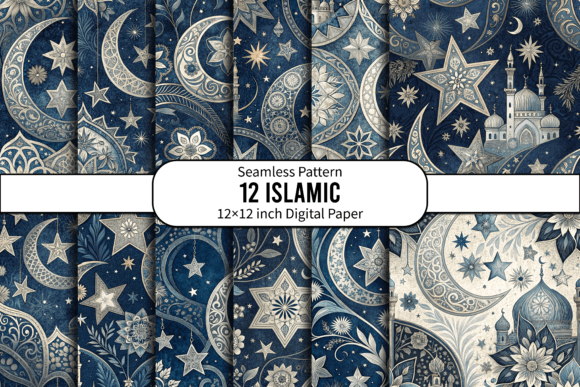
At their core, these patterns are rooted in the rich heritage of Islamic art, which has historically avoided figurative representation in favor of complex geometric tessellations, calligraphy, and vegetal motifs. The "starry" element introduces a celestial dimension, often utilizing deep midnight blues, shimmering silvers, and radiant golds to evoke the feeling of a starlit desert sky. When these elements are combined into seamless digital papers, they offer a resource that is both culturally significant and aesthetically versatile. The result is a collection of assets that feel simultaneously historic and contemporary, suitable for a vast array of applications.
The Geometric Foundation of Celestial Motifs
To truly appreciate the value of Celestial Starry Islamic Patterns, one must first understand the geometric rigor behind them. Islamic geometric design is famous for its use of symmetry, repetition, and infinite extension. Traditional star patterns, often based on polygons like octagons or decagons, represent the underlying order of the universe. By infusing these structures with celestial imagery—such as crescent moons, twinkling stars, and gradient backgrounds that mimic the twilight hours—designers create a visual narrative that speaks to spirituality and wonder.
The technical execution of these patterns in a digital format requires meticulous attention to detail. High-quality versions, such as those found in professional collections, typically boast a resolution of 300 DPI (dots per inch). This specification is crucial because it ensures that the intricate lines of the geometric stars and the subtle gradients of the night sky remain crisp and clear, regardless of the output size. Whether the final product is a small invitation card or a large-scale wall mural, the integrity of the design is preserved. Dimensions often standardize at 12 x 12 inches (305 x 305 mm) or 3600 x 3600 pixels, providing a square canvas that is ideal for tiling and seamless repetition.
Versatility Across Industries and Projects
The practical application of seamless starry background designs extends far beyond simple decoration. Because these files are usually provided in versatile formats like PNG and JPEG, they can be integrated into workflows across multiple industries. For the event planning sector, these patterns serve as an elegant backdrop for wedding invitations, party decor, and greeting cards. The combination of a midnight blue base with silver star motifs conveys a sense of luxury and solemnity, making it particularly popular for evening events or religious celebrations such as Ramadan and Eid.
In the realm of product design and merchandise, the utility of these digital papers is equally profound. Entrepreneurs creating custom t-shirts, cellphone covers, or tote bags can utilize these high-resolution files to produce goods that stand out in a crowded market. The seamless nature of the pattern means that designers can scale the image to fit any product dimension without worrying about awkward cuts or visible seams. Furthermore, the aesthetic appeals to a broad demographic, bridging the gap between those who appreciate traditional cultural art and those who are drawn to modern celestial trends.
Digital creators and web designers also find immense value in these assets. A starry night Islamic wallpaper or a subtle patterned background can add depth and texture to a website without overwhelming the foreground content. Unlike solid colors or noisy photographs, a well-constructed geometric pattern provides visual interest while maintaining readability. This makes it an excellent choice for educational platforms, cultural blogs, or portfolio sites where the designer wishes to project an image of sophistication and thoughtfulness.
Technical Considerations for Professional Use
When selecting digital assets for commercial or professional projects, the quality of the source file is paramount. A key advantage of premium Islamic digital celestial paper packs is the inclusion of multiple file formats. Typically, a comprehensive collection will include both PNG and JPEG files. PNG files are essential for projects requiring transparency or layers, allowing the pattern to be overlaid on other graphics without a white box surrounding it. JPEGs, on the other hand, are universally compatible and often smaller in file size, making them ideal for web usage or quick printing tasks.
The resolution of 300 DPI is the industry standard for professional printing. It ensures that when the pattern is rendered on physical media—be it scrapbooking paper, fabric, or cardstock—the edges of the Islamic geometric stars remain sharp. Lower resolution images often result in pixelation, which can ruin the delicate balance of the geometric design. Additionally, the color profile of these digital papers is critical. High-quality sets utilize color spaces that accurately reproduce deep blues and metallic silvers, ensuring that the "shimmering" effect described in the design concept translates effectively to the final print.
For those involved in crafting and DIY projects, the ease of use is another significant factor. A 12 x 12 inch format aligns perfectly with standard scrapbooking supplies and cutting machines. This compatibility allows hobbyists to easily incorporate crescent and stars Islamic design elements into albums, journals, and home decor items. The seamless repeat capability means that users can tile the image indefinitely to cover larger surfaces, such as gift wrap or table runners, creating a cohesive look throughout their project.
Cultural Significance and Aesthetic Appeal
Beyond the technical specifications and practical applications, there is a deeper cultural resonance to using Celestial Starry Islamic Patterns. Islamic art has long been associated with the contemplation of the infinite and the divine order of the cosmos. The star patterns, often referred to as "girih" tiles in historical contexts, symbolize the interconnectedness of all things. By integrating celestial themes like the moon and stars, these modern interpretations pay homage to the historical importance of astronomy in Islamic civilization, where scholars made groundbreaking advancements in mapping the heavens.
This cultural depth adds a layer of meaning to any project utilizing these patterns. For educators and researchers, these visuals can serve as powerful tools to illustrate historical concepts or to decorate educational materials related to history, mathematics, or astronomy. For businesses owned by members of the Muslim community, using authentic and respectful Islamic-inspired celestial patterns reinforces brand identity and connects with the audience on a cultural level. It demonstrates an appreciation for heritage while embracing modern design trends.
The aesthetic appeal also lies in the color psychology employed in these designs. Midnight blue evokes feelings of calm, stability, and depth, while silver and white accents suggest clarity and illumination. This color palette is universally soothing and is often associated with luxury and elegance. Consequently, these patterns are not limited to religious or cultural contexts; they are equally at home in high-end fashion design, interior decorating, and corporate branding where a touch of understated sophistication is desired.
Implementing Patterns in Digital and Physical Workflows
Integrating seamless celestial Islamic art into a workflow requires a strategic approach to maximize its potential. For graphic designers, the process often begins with selecting the appropriate scale. While the source file may be 3600 x 3600 pixels, the pattern might need to be scaled down for a subtle texture or scaled up for a bold statement piece. Software such as Adobe Photoshop or Illustrator allows for precise manipulation of these raster images, enabling the user to adjust opacity, blend modes, and color balances to suit the specific needs of the project.
In the context of web development, these patterns can be implemented as CSS background images. Because they are seamless, they can be set to repeat horizontally and vertically, creating an infinite backdrop that loads efficiently. This is particularly useful for landing pages or headers where a full-screen image might be too heavy. The silver star repeat pattern can add a dynamic feel to a static page, enhancing user engagement without distracting from the primary message.
For physical production, such as printing on demand services for t-shirts or mugs, the high resolution of the files ensures that the transfer process yields a professional result. The clarity of the Islamic star motifs prevents the blurring that often occurs with lower quality downloads. Crafters using die-cutting machines can import these JPEG or PNG files directly into their software, trace the geometric shapes if necessary, and cut them out for layered paper crafts. The versatility of the file types ensures that whether the end goal is digital or physical, the starting point remains robust and reliable.
Future Trends in Digital Pattern Design
As the digital landscape evolves, so too does the demand for niche, high-quality assets like Celestial Starry Islamic Patterns. There is a growing trend towards hyper-personalization and cultural authenticity in design. Consumers are increasingly seeking products that tell a story or reflect a specific heritage, moving away from generic, mass-produced aesthetics. This shift favors detailed, culturally rich patterns that offer both beauty and meaning. The fusion of traditional geometry with celestial themes positions these patterns at the forefront of this trend.
Furthermore, the rise of virtual environments and the metaverse presents new avenues for these designs. Imagine a virtual mosque or a cultural exhibition space textured with midnight blue star patterns that glow softly in the digital light. The adaptability of these seamless textures makes them perfect candidates for 3D modeling and virtual reality experiences. As technology advances, the line between digital paper and immersive environment blurs, and assets that possess high fidelity and cultural depth will become even more valuable.
In conclusion, the exploration of Celestial Starry Islamic Patterns reveals a rich tapestry of history, mathematics, and artistic expression. From the precise geometry of the stars to the深邃 depths of the midnight blue background, these designs offer a unique resource for a wide spectrum of users. Whether utilized for a personal scrapbook, a commercial product line, or a digital interface, they bring a timeless elegance and a touch of the cosmic to every project. By understanding their technical requirements, cultural significance, and diverse applications, creators can fully leverage the potential of these stunning digital papers to produce work that is both visually striking and deeply meaningful.