Integrating the Vintage Tabs Ink Edge Blank Template into Your Creative Workflow
In the realm of analog organization and creative documentation, the tactile experience of handling paper remains unmatched by digital interfaces. For junk journal enthusiasts, scrapbookers, and small business owners who value branded, handcrafted touches, the Vintage Tabs Ink Edge Blank Template serves as a foundational asset. This resource is not merely a decorative element; it is a functional tool designed to streamline the creation of indexed, navigable, and aesthetically cohesive physical archives. By understanding how to integrate this template into your broader production process, you can elevate the quality of your projects while maintaining efficiency and consistency.
Understanding the Asset and Its Role in Project Planning
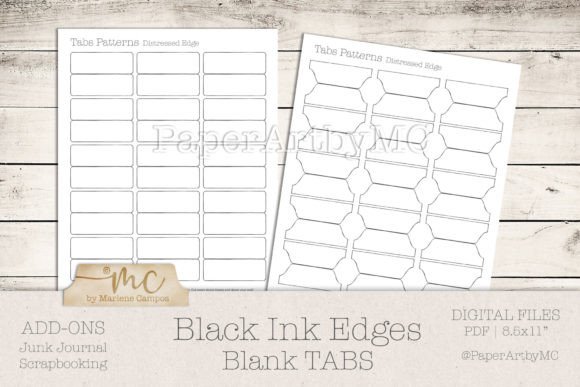
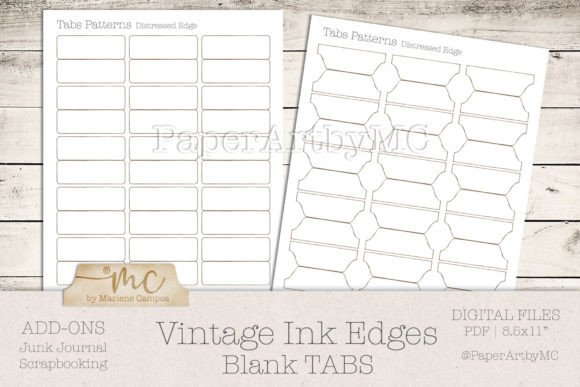
The Vintage Tabs Ink Edge Blank Template is a high-resolution PDF file specifically engineered for printing onto decorative or heavy-weight paper. Unlike pre-printed tabs that limit your design choices, this blank pattern provides the structural framework—the inked edges and tab shapes—while leaving the interior space open for customization. This duality makes it an ideal starting point for a variety of workflows, from personal memory keeping to professional product packaging.
In a typical creative workflow, this template fits into the preparation and asset generation phase. Before you begin writing content, adhering photos, or assembling your journal, you need a reliable indexing system. These tabs act as the skeleton of your project, allowing you to categorize sections logically. Whether you are organizing a year-long planner, a travel log, or a client portfolio, establishing this structure early ensures that the subsequent layers of content have a designated home. The "ink edge" aesthetic provides an instant vintage appeal, reducing the need for additional distressing techniques and saving time during the decoration phase.
Technical Preparation: Paper Selection and Printer Compatibility
Successful implementation of any printable ephemera begins with selecting the right materials. The quality of your final output is directly dependent on the interaction between the digital file and the physical medium. For the Vintage Tabs Ink Edge Blank Template, paper weight is a critical variable. While standard copy paper might suffice for rough drafts, it lacks the durability required for functional tabs that will be flipped through repeatedly.
For optimal results, aim for paper with a grammage between 120g and 180g. Opaline paper at 120g is a viable option for lighter projects, but upgrading to 160g or 180g cardstock offers superior rigidity. This heavier stock prevents the tabs from curling over time and ensures they stand out distinctly from the pages they index. If you are printing on decorative paper with existing patterns or textures, ensure the surface is smooth enough to accept ink without bleeding, which could obscure the crispness of the template's ink edges.
Regarding hardware, a color home printer is sufficient for most users. Brands like HP are commonly used and yield reliable results when configured correctly. However, the key to professional-grade output lies in your printer settings. Always access your printer preferences to manually select the specific paper type and size (8.5x11 inches). Do not rely on automatic detection, as this often leads to misalignment or poor ink saturation. Set the resolution to the highest available setting to capture the fine details of the vintage ink effects. Since every computer and printer combination has unique variations, running a test print on standard paper is a non-negotiable step in the quality control process. This allows you to verify alignment and color fidelity before committing your expensive decorative paper.
Execution: Printing, Cutting, and Assembly
Once your settings are dialed in, the production phase begins. The kit typically includes two sheets of tab patterns designed to fit standard letter-sized paper. Depending on your project's complexity, you may choose to print single-sided or double-sided. Double-sided printing adds a layer of sophistication, ensuring the tabs look finished regardless of how the page is turned. However, this requires precise calibration. If your home printer struggles with duplex alignment, it is often more efficient to print single-sided and accept that the reverse side will be blank, or to take the file to a professional print shop.
Local copy centers possess industrial-grade printers that handle heavy cardstock and double-sided registration with greater precision than consumer models. For entrepreneurs producing these items for sale or for large-scale corporate archives, outsourcing the printing phase can be a strategic move to ensure consistency across hundreds of units. After printing, the process shifts to manual execution. These templates are designed to be cut by hand, which adds a human touch to the final product. Use sharp scissors or a precision craft knife along with a metal ruler for straight edges. Taking care during the cutting phase prevents frayed edges that could detract from the vintage aesthetic.
Integration into Diverse Workflows
The versatility of the Vintage Tabs Ink Edge Blank Template allows it to slot into various stages of different professional and personal workflows:
- Educators and Trainers: Use the tabs to create modular handouts or resource guides. The blank center allows for typing or handwriting specific module titles, making it easy to update content without redesigning the entire divider set.
- Small Business Owners: Incorporate these tabs into client welcome packets or project portfolios. The vintage style conveys a sense of craftsmanship and attention to detail that reinforces brand value.
- Content Creators and Bloggers: When planning content calendars physically, these tabs can separate months or themes, providing a visual overview of your publishing schedule.
- Event Planners: Assemble custom guest books or vendor directories where the tabs denote different sections such as "Venues," "Catering," and "Timeline."
Maintenance and Long-Term Usability
One of the advantages of using a digital template like this is the ability to reproduce assets as needed. Unlike buying a fixed pack of stickers, owning the PDF file means you can reprint tabs whenever your project expands. This supports long-term usability and scalability. If you run out of tabs mid-project, you can simply print another sheet, ensuring perfect consistency in design.
To maintain the integrity of your printed tabs over time, consider the environment in which they will be stored. High humidity can affect even heavy cardstock, so storing your journals or binders in a climate-controlled space is advisable. Additionally, if you are using these for frequent reference, reinforcing the base of the tab with a small strip of clear washi tape or laminate can extend its lifespan significantly.
Troubleshooting Common Issues
Even with careful planning, variables can arise. If your ink appears washed out, check your printer's ink levels and clean the print heads. If the colors look different from what you see on your screen, remember that monitors use RGB light while printers use CMYK ink; slight variations are normal. This is why proofing is essential. If the cut lines seem off, ensure your printer is not scaling the image. Always select "Actual Size" or "100%" in your print dialog box to prevent the software from shrinking the template to fit margins, which would throw off the dimensions.
By treating the Vintage Tabs Ink Edge Blank Template as a core component of your organizational strategy rather than just a decorative afterthought, you enhance both the functionality and the beauty of your physical documents. Whether you are a hobbyist preserving memories or a professional curating information, the process of selecting the right paper, calibrating your equipment, and executing precise cuts transforms a simple PDF into a powerful tool for clarity and creativity.