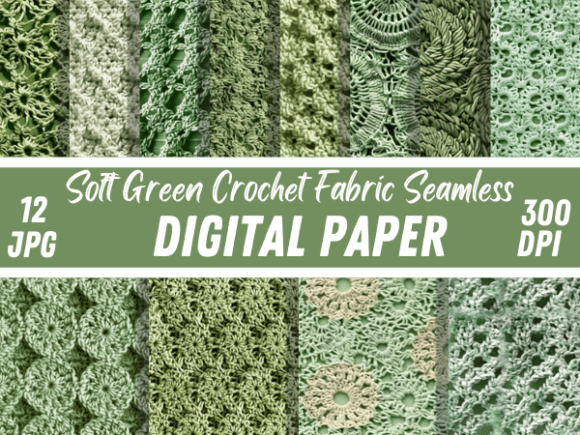
Evaluating Soft Green Crochet Fabric Backgrounds for Digital Crafting
In the realm of digital design and crafting, texture plays a pivotal role in conveying mood and tactile quality. Soft Green Crochet Fabric Backgrounds represent a specific category of digital assets designed to simulate the intricate weave and cozy aesthetic of hand-knitted textiles. These digital papers are not physical fabrics but high-resolution image files intended for use in graphic design software, sublimation printing, and various DIY craft projects. Understanding the capabilities, limitations, and ideal applications of these textures is essential for creators looking to integrate a natural, handmade feel into their work without the constraints of physical materials.
Understanding the Asset: Digital Simulation vs. Physical Texture
At its core, a set of Soft Green Crochet Fabric Backgrounds consists of digital images, typically provided in JPG format with a resolution of 300 DPI and dimensions around 3600 x 3600 pixels. The primary function of these files is to replicate the visual complexity of yarn, threadwork, and woven fibers. The "soft green" hue often leans toward pastel mint, subdued sage, or natural greenery tones, evoking a sense of calm, homeliness, and organic simplicity.
It is crucial for users to recognize that these are digital products. While they offer high details of wrapping paper textures and fabric weaves, they do not possess the physical properties of cloth. The value lies in their repeatability and seamless nature, allowing designers to tile them across large surfaces or apply them to specific shapes within a design layout. The variation in color due to monitor settings is a standard consideration; what appears as a vibrant mint on one screen may render as a softer seafoam on another, necessitating careful proofing before final production.
Strategic Applications and Ideal Use Cases
The versatility of these textile texture designs makes them a strong fit for a wide array of creative endeavors. Their organic aesthetic aligns particularly well with projects requiring a touch of rustic elegance or vintage charm.
- Sublimation and Product Customization: The high resolution (300 DPI) makes these backgrounds suitable for sublimation printing on items like acrylic tumblers, 11oz mugs, and tote bags. The texture adds depth to the print, preventing the "flat" look often associated with solid color transfers.
- Paper Crafts and Stationery: For wedding stationeries, greeting cards, and invitations, these patterns provide a sophisticated backdrop that mimics expensive handmade paper or embroidered linens. They are especially effective for Valentine's Day 2024 themes or spring birthdays where a soft, romantic atmosphere is desired.
- Digital Scrapbooking and Junk Journals: Crafters creating digital layouts or printable junk journal pages can use these textures to simulate fabric pockets, stitched borders, or cozy background layers, enhancing the "homespun" narrative of their projects.
- Vinyl Decals and Wall Art: When used as a base for vinyl cutting machines or large-format wall art prints, the subtle weave pattern adds visual interest without overwhelming foreground elements like text or illustrations.
Benefits of Using Digital Textile Patterns
Opting for digital representations of crochet fabric offers several distinct advantages over sourcing physical materials or photographing real textiles.
Consistency and Repeatability: A bundled set of 12 digital papers ensures a consistent color palette and texture density across an entire project suite. Unlike physical fabric, which may have dye lots or weaving inconsistencies, digital files remain uniform. This is critical for branding materials or multi-page documents where visual coherence is paramount.
Cost and Accessibility: Acquiring a variety of physical handcrafted fabrics can be costly and time-consuming. Digital bundles provide immediate access to multiple variations of soft green textures—from tight knits to loose weaves—in a single zip file. This allows for rapid prototyping and experimentation without material waste.
Adaptability: Digital textures can be manipulated in ways physical fabric cannot. Designers can adjust opacity, blend modes, and saturation to suit specific lighting conditions within a composite image. They can also be easily scaled or cropped to fit unique dimensions, such as specific mug wraps or book covers, without the need for cutting and sewing.
Considerations and Potential Tradeoffs
While Soft Green Crochet Fabric Backgrounds are powerful tools, they are not a universal solution. There are specific scenarios where their use may present challenges or where alternatives might be more appropriate.
Print Quality Dependencies: The final output quality is heavily dependent on the printing method and substrate. Printing a high-detail textile texture on low-quality paper or using a low-resolution printer can result in a muddy or pixelated appearance, losing the delicate definition of the stitch work. Users must ensure their hardware matches the 300 DPI standard of the source files.
Lack of Tactile Reality: For projects where the end-user expects to physically feel the texture—such as high-end luxury packaging or tactile children's books—a printed image of fabric may feel disappointing compared to actual embossed paper or real textile application. In these cases, the visual trickery of a digital print may fall short of the sensory expectation.
Color Fidelity: As noted, colors may vary slightly due to monitor settings and printer profiles. The "soft green" intended for a serene, natural look could shift towards a cooler blue-green or a warmer yellow-green depending on the color management workflow. Professionals should always request physical proofs for critical color-matching tasks rather than relying solely on screen previews.
Decision-Making Insights for Creators
When evaluating whether to incorporate Soft Green Crochet Fabric Backgrounds into a workflow, creators should assess their project goals against the nature of the asset.
If the objective is to evoke a feeling of warmth, tradition, and handmade care in a digital or printed medium, these textures are an excellent choice. They are particularly effective for seasonal campaigns (Winter, Valentine's Day), eco-friendly branding, and artisanal product lines where the story of "craft" is central to the message.
However, if the project requires genuine three-dimensional texture, stretchability, or drape, physical fabric remains the necessary alternative. Similarly, if the design demands a hyper-modern, sleek, or industrial aesthetic, the rustic and organic nature of crochet textures might clash with the overall visual language.
Ultimately, the decision hinges on the balance between visual suggestion and physical reality. For most graphic designers, scrapbookers, and sublimation artists, the convenience, detail, and atmospheric quality of these digital bundles offer a compelling solution. They bridge the gap between the digital workspace and the tangible world, allowing for the creation of assets that feel touched by human hands, even when produced through modern technology.
By understanding the technical specifications—such as the JPG format, pixel dimensions, and seamless repeat capabilities—users can maximize the potential of these files. Whether used for iron-on transfers, envelope liners, or digital backdrops, Soft Green Crochet Fabric Backgrounds serve as a versatile foundation for adding depth and character to creative projects.