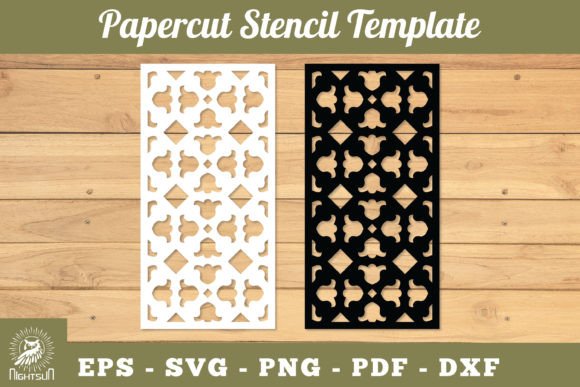
Elevating Precision and Artistry with Decorative Papercut Stencil SVG 2
In the evolving landscape of digital crafting and professional design, the demand for precision, versatility, and high-quality assets has never been more critical. Whether you are a seasoned graphic designer, a small business owner creating custom packaging, or a hobbyist exploring the intricate world of paper arts, the tools you choose define the quality of your output. This is where Decorative Papercut Stencil SVG 2 emerges as a significant resource. It represents more than just a digital file; it is a bridge between traditional artistic techniques and modern manufacturing capabilities, allowing creators to produce complex, layered designs with unprecedented ease.
The relevance of such assets lies in their ability to adapt to various workflows. As consumer preferences shift towards personalized, handcrafted aesthetics—even when produced at scale—designers need files that offer flexibility without compromising on detail. The "SVG 2" designation often implies an evolution in complexity or a specific iteration designed to overcome limitations found in earlier versions, ensuring cleaner cuts and better compatibility across different software ecosystems.
The Convergence of Tradition and Digital Workflow
Papercutting is an ancient art form, historically requiring immense patience, steady hands, and specialized blades. Today, technology has democratized this craft. Cutting machines and laser cutters have replaced the X-Acto knife for many professionals, but the quality of the final product still hinges entirely on the source file. A poorly vectorized image can lead to jagged edges, disconnected bridges, or machine errors that ruin expensive materials.
This is why the comprehensive file suite included with Decorative Papercut Stencil SVG 2 is so valuable. The package typically includes an SVG for cutting, which is the industry standard for web-based design tools and most consumer cutting machines like Cricut or Silhouette. However, professional environments often require more robust formats. The inclusion of an AI CS6 file ensures compatibility with Adobe Illustrator, allowing advanced users to manipulate anchor points, adjust stroke weights, and integrate the stencil into larger branding projects seamlessly.
Furthermore, the presence of an EPS file guarantees vector scalability for legacy systems or specific print workflows that do not support newer AI versions. For those who need immediate visual previews or raster-based editing, the High Quality PNG offers a transparent background option, perfect for mockups, social media graphics, or digital invitations where physical cutting isn't the immediate goal. The PDF format serves as a universal viewer-friendly option for clients who need to approve designs before production, while the DXF file caters specifically to CAD software and industrial laser cutting setups. This multi-format approach acknowledges that modern creators operate in diverse technical environments.
Adapting to Modern Market Demands and Lifestyle Shifts
The rise of the "maker economy" and the gig economy has changed how individuals approach creative work. Freelancers and entrepreneurs are no longer just service providers; they are product creators. A wedding planner might use these stencils to create bespoke table numbers, while a boutique owner could use them to design unique window displays or packaging inserts. The trend towards experiential retail and personalized gifting means that generic, mass-produced decorations are losing their appeal. Consumers are willing to pay a premium for items that feel curated and unique.
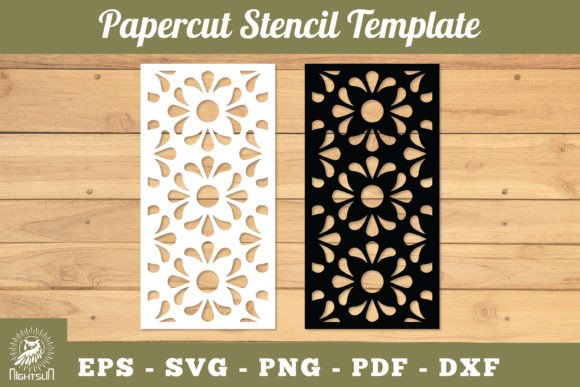
Decorative Papercut Stencil SVG 2 fits perfectly into this shift. Its intricate patterns allow for the creation of shadow boxes, layered greeting cards, and decorative lighting fixtures that catch the eye. In the context of interior design, there is a growing appreciation for texture and depth. Flat, two-dimensional wall art is being supplemented, and sometimes replaced, by dimensional pieces that play with light and shadow. Papercut stencils are ideal for creating these effects, whether through actual paper layering or by using the designs as masks for paint, fabric, or even metalwork.
Moreover, the educational sector has seen a resurgence in STEAM (Science, Technology, Engineering, Arts, and Mathematics) initiatives. Educators are looking for resources that teach geometry, symmetry, and spatial reasoning through engaging projects. These stencil files provide a ready-made curriculum tool where students can learn about vector graphics, material properties, and the physics of structural integrity in paper engineering.
Practical Implications for Professionals and Creators
For the working professional, time is the most scarce resource. The value of a well-constructed SVG file lies in its "ready-to-cut" nature. A high-quality file saves hours of troubleshooting. When you download a package containing SVG, AI, EPS, PNG, PDF, and DXF files, you are essentially buying insurance against workflow bottlenecks. You don't have to waste time converting formats or fixing broken paths. You can import the file, select your material settings, and begin production immediately.
Consider the implications for a marketing agency producing a limited-run promotional campaign. Using a decorative papercut design for a direct mail piece can significantly increase engagement rates compared to a standard flyer. The tactile nature of a cut-paper invite suggests luxury and attention to detail. With the right file, the agency can outsource the cutting to a local vendor or handle it in-house if they possess the equipment, knowing that the DXF or AI file will translate accurately to the machinery.
Similarly, for bloggers and content creators, visual distinctiveness is key to standing out in a saturated feed. Using these stencils to create custom backdrops for photography or unique props for video content adds a layer of professionalism. The High Quality PNG included in the set allows for quick integration into digital layouts, while the vector files enable the creation of physical props that can be reused across multiple shoots, offering a high return on investment.
Navigating Technical Nuances and Material Choices
While the digital file is the blueprint, the physical execution depends on material selection. One of the advantages of having access to multiple file formats like EPS and AI CS6 is the ability to prepare the design for specific materials. Cardstock behaves differently than vinyl or adhesive foil. Thicker materials may require simplified bridge structures to prevent tearing, whereas thinner papers can handle the finest details of the Decorative Papercut Stencil SVG 2.
Professionals often use the vector files to create "kiss cuts" versus "through cuts." A kiss cut slices only the top layer of a sticker sheet, leaving the backing intact, while a through cut separates the shape entirely. The precision of the SVG paths determines whether these techniques succeed. If the nodes are too dense or the curves are not smooth, the machine may stutter, leading to imperfect edges. High-quality assets minimize these risks, ensuring that the intricate loops and flourishes of the design remain crisp.
It is also worth noting the environmental aspect of modern crafting. There is a conscious move towards sustainable materials. Designers are increasingly using recycled cardstocks and biodegradable papers. Because these materials can be less uniform than virgin pulp, the reliability of the cutting file becomes even more important. A robust SVG ensures that the machine follows the path accurately, reducing material waste caused by misfires or jams.
Future-Proofing Your Creative Assets
As we look toward the future of design and manufacturing, the line between digital and physical continues to blur. Augmented reality (AR) experiences often start with a physical trigger image. A complex papercut design could serve as an excellent marker for AR filters, blending the tangible beauty of paper art with interactive digital overlays. Having the source files in editable formats like AI or EPS allows creators to adapt the design for these emerging technologies without starting from scratch.
Furthermore, the modularity of these designs encourages remixing and iteration. A freelancer might take the core elements of Decorative Papercut Stencil SVG 2 and combine them with other assets to create a entirely new pattern for a textile print or a laser-engraved wooden sign. The versatility of the included PDF and D XF files ensures that these adaptations can be shared with collaborators who may use different software stacks, fostering a more inclusive and efficient collaborative environment.
In conclusion, the utility of Decorative Papercut Stencil SVG 2 extends far beyond a simple download. It is a strategic asset for anyone involved in the creation of visual or tactile experiences. By providing a comprehensive suite of formats—SVG, AI, EPS, PNG, PDF, and DXF—it addresses the fragmented nature of modern creative workflows. Whether you are cutting a single invitation for a friend or running a batch of five hundred custom packaging units for a client, the quality and flexibility of your source files determine the ceiling of your potential. Embracing these tools allows creators to focus less on technical hurdles and more on the artistry and innovation that drive their work forward.