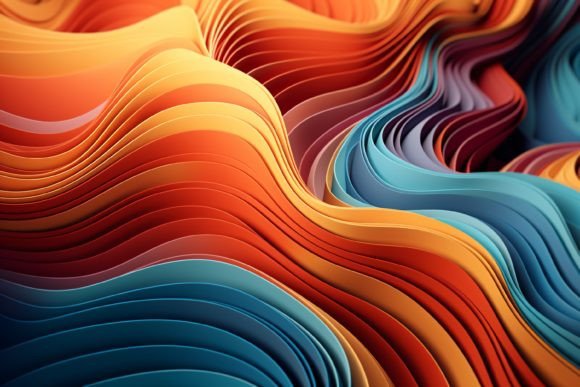
Evaluating the Impact of Abstract Psychedelic 3d Shape Backgrounds in Modern Design
In the rapidly evolving landscape of digital and print media, visual identity plays a pivotal role in capturing audience attention. Among the myriad of design assets available, the Abstract Psychedelic 3d Shape Background has emerged as a distinct category that bridges the gap between retro nostalgia and futuristic rendering techniques. For designers, marketers, and business owners aged 20 to 50 who are evaluating resources for their next project, understanding the specific utility, technical specifications, and comparative advantages of this style is essential. This analysis explores where these assets fit within a broader design strategy, weighing their strengths against potential limitations to help you make an informed decision.
Defining the Aesthetic and Technical Profile
An Abstract Psychedelic 3d Shape Background is characterized by fluid, organic forms that often mimic liquid metal, iridescent glass, or morphing geometric structures. Unlike flat vector patterns or standard photographic textures, these backgrounds utilize depth, lighting, and complex color gradients to create a sense of movement and dimensionality. The "psychedelic" element refers not just to vibrant colors, but to the surreal, dream-like quality of the shapes which often defy traditional physics.
From a technical standpoint, the quality of the asset dictates its versatility. High-resolution files, such as those offering 2000×2000 px dimensions at 300 DPI in RGB Color, provide the necessary fidelity for both screen and print applications. The RGB color space ensures that the neon hues and subtle gradients render accurately on digital displays, while the 300 DPI resolution allows for crisp reproduction in physical formats without pixelation. When evaluating a file, it is crucial to verify these specifications, as lower resolution alternatives may fail when scaled for large-format printing or high-density retina screens.
Comparative Analysis: 3D Abstract vs. Traditional Alternatives
When selecting a background, designers often weigh several options: solid colors, minimalistic line art, stock photography, or generative AI patterns. Here is how the psychedelic 3d shape approach compares:
- Versus Solid Colors and Gradients: While solid backgrounds offer cleanliness, they often lack the visual hook required for social media scrolling or eye-catching banners. A psychedelic 3d shape adds immediate depth and intrigue without requiring additional overlay elements.
- Versus Stock Photography: Real-world photos can sometimes feel generic or dated. Abstract 3d shapes offer a timeless, brand-neutral aesthetic that avoids the "stock photo" look, allowing the foreground content (text or products) to stand out more effectively.
- Versus Flat Vector Patterns: Flat design remains popular for its clarity, but it can appear two-dimensional on modern devices. The lighting and shadow play inherent in 3d shapes provide a tactile quality that flat vectors cannot replicate, making them superior for creating a premium feel.
- Versus Generative AI Outputs: While AI can generate unique images, it often struggles with consistency and specific resolution requirements. A curated, high-resolution JPG file ensures predictable quality and color accuracy, which is vital for branding consistency across different materials.
Strategic Applications Across Media Formats
The adaptability of an Abstract Psychedelic 3d Shape Background makes it a versatile tool for various professional and creative contexts. However, its effectiveness depends on how it is deployed.
Digital Marketing and Web Presence
In the realm of website banners and E-commerce shop Banners, these backgrounds serve as excellent containers for product highlights. The fluid nature of the shapes guides the viewer's eye toward the center or specific call-to-action buttons. For App UI Design, using a subdued version of these shapes can add sophistication to loading screens or profile headers without overwhelming the user interface. Similarly, for social media posts and digital marketing materials, the vibrant colors stop the scroll, increasing engagement rates compared to static, plain backgrounds.
Print and Physical Branding
Contrary to the belief that 3d digital art is only for screens, the high resolution (300 DPI) makes these files suitable for printed materials. They work exceptionally well on business cards, brochures, and invitations where a modern, tech-forward image is desired. For packaging and labels, the psychedelic elements can convey innovation, making them ideal for beauty products, tech accessories, or lifestyle brands targeting a younger demographic. Even interior decorative wall stickers benefit from this style, transforming office spaces or retail environments into immersive experiences.
Merchandise and Personalization
The square aspect ratio (2000×2000 px) is particularly advantageous for merchandise. It fits perfectly on Phone Cases, mugs, notepad covers, and journal covers. For scrapbooking and Stationery, these backgrounds act as dynamic bases for layering other design elements. The key here is ensuring the color profile matches the printing method; while RGB is standard for digital proofing, professional printers may require conversion to CMYK, which can slightly alter the intensity of neon psychedelia. Understanding this tradeoff is part of the evaluation process.
Decision Factors: When to Choose This Style
Selecting the right background involves assessing your brand voice and the specific goals of the project. An Abstract Psychedelic 3d Shape Background is the optimal choice when:
- You need to convey innovation: Industries like tech, crypto, music, and fashion benefit from the futuristic vibe.
- Visual hierarchy is critical: The natural curves and lighting of 3d shapes can frame text or products better than chaotic patterns.
- Budget constraints limit custom 3d modeling: Purchasing a high-quality pre-rendered background is significantly more cost-effective than hiring a 3d artist to create a scene from scratch.
- Cross-platform consistency is required: Using the same high-res file for both a Presentation Slide and a Photography Backdrop ensures a unified brand look.
However, there are scenarios where this style may not be the best fit. If your brand identity relies on minimalism, strict corporate conservatism, or high-contrast black-and-white aesthetics, the colorful and complex nature of psychedelic shapes might clash. Additionally, if the foreground content is already highly detailed or busy, adding a complex 3d background could reduce readability. In such cases, a simpler texture or a blurred version of the 3d shape might be a necessary compromise.
Technical Considerations and Workflow Integration
Integrating these assets into your workflow requires attention to file formats and editing capabilities. The standard JPG File format offers broad compatibility with software like Photoshop, Illustrator, Canva, and PowerPoint. However, JPG is a lossy format. While a high-quality 2000px JPG is sufficient for most uses, editors should be aware that heavy manipulation (such as extreme color shifting) might reveal compression artifacts. For users requiring extensive layering or transparency, checking if a PNG or PSD version is available alongside the JPG is a prudent step, though the JPG remains the most universally accessible option for immediate use.
Furthermore, the RGB Color specification is optimized for light-emitting devices. When transitioning to print, designers must anticipate color shifts. The electric blues and hot pinks typical of psychedelic art may appear duller on paper. It is advisable to run a test print or soft-proof the design before committing to a large run of envelopes, letterheads, or decorative craft items.
Final Evaluation
The Abstract Psychedelic 3d Shape Background represents a powerful resource in the modern designer's toolkit. It offers a unique blend of artistic flair and technical utility, suitable for everything from graphic design projects to interior decorative applications. By providing a high-resolution, versatile foundation, it allows creators to elevate their Branding efforts without the overhead of custom 3d production.
Ultimately, the decision to utilize this style should be driven by your specific communication goals. If you aim to project energy, creativity, and modernity, these backgrounds provide a compelling advantage over static alternatives. By carefully considering the medium, the audience, and the technical constraints of your project, you can leverage these assets to create visually striking materials that resonate with viewers across both digital and physical touchpoints.